Equipment selection starts with the applicable process specification. The performance of a proposed unit must be verified at the intended operating conditions.
What is the difference between a gaseous nitrogen generator and liquid nitrogen production?
PSA and membrane nitrogen generation produces a pressurized gas. A cryogenic air-separation or liquefaction plant uses low temperatures to produce or recover liquids and gases; it is a different equipment category.
Liquid nitrogen delivered to site can be vaporized to supply gaseous nitrogen. The buyer then receives gaseous product at the process, despite purchasing it in liquid form. Distinguish the delivery state from the final use state when comparing specifications.
Commercial supply decisions differ from nitrogen generator purchasing and supply channel options.
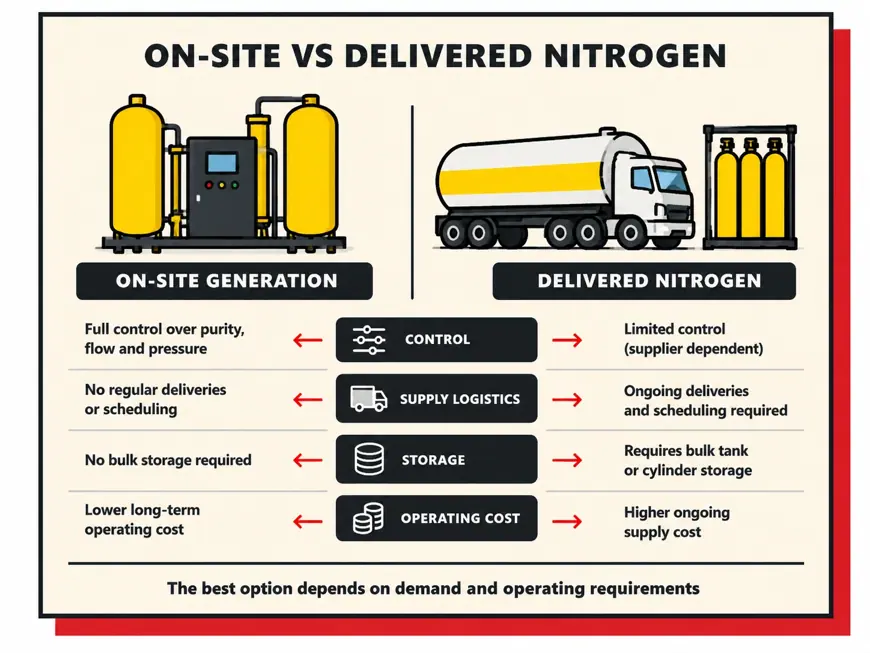
How does on-site gas generation compare with liquid nitrogen delivered to site?
Options include compressed-gas cylinders, liquid dewars, microbulk storage, bulk liquid tanks with vaporizers, and on-site gaseous generation. Each involves different containers, delivery arrangements, maintenance, and site infrastructure.
| Method | Typical operational trade-off |
|---|---|
| Cylinders | Small, intermittent consumption; regular handling and replacement |
| Liquid storage | Large delivered volumes; cryogenic storage and refill logistics |
| PSA/membrane gas plant | Local production; compressor, power, air treatment, and maintenance |
Any option can require backup and a process-specific gas-quality guarantee.
Distinguish delivered cryogenic nitrogen from on-site nitrogen gas generation equipment and applications.
Cost parity requires cost of nitrogen generators versus delivered nitrogen contracts and actual utilization.
A supply switch begins with nitrogen demand calculation for converting from delivered supply.
Which operating patterns favor cylinders, liquid tanks or on-site generation?
Cylinders may fit low-volume intermittent applications; on-site generation becomes more interesting as regular use and delivery costs increase; bulk liquid may suit demanding purity or large and variable gas consumption. These are screening tendencies, not purchase rules.
Model peak pressure and flow, on-site utilities, loading access, inventory resilience, emissions and safety procedures. Do not recommend generation solely because annual purchased-gas expenditure appears large.
How do purity, pressure and delivery reliability differ across supply methods?
The specified gas may need a precise oxygen, moisture, or other impurity limit. Delivered liquid nitrogen can produce gaseous nitrogen via vaporization, but the overall system still needs correct pressure regulation and quality control.
For on-site production, consider compressor failure and maintenance; for liquid delivery, consider storage level, boil-off, vaporizer capacity, and deliveries. A viable comparison states how much backup autonomy the process needs under a supply interruption.
Planning an installation? Compare equipment using the application, gas purity, peak flow, and pressure described above. Prepare an independent nitrogen generator RFQ.
What costs should be compared beyond nitrogen unit price?
A lifecycle comparison includes cylinder rental and handling, liquid storage lease, delivery charges, losses from venting or boil-off, plant capital, compressor electricity, drying, maintenance, and standby supply.
Use common units, such as dollars per normal cubic metre of usable gas at the required quality, with defined annual consumption. See the nitrogen generator cost calculation to prevent comparisons between a delivered commodity price and a fully installed plant cost.
How are oxygen-deficiency and cryogenic hazards different?
Nitrogen gas can create oxygen-deficient atmospheres if released into poorly ventilated spaces. Liquid nitrogen adds severe cold-contact and boil-off hazards, possible pressure build-up in incorrectly isolated equipment, and specialist storage needs.
Neither method is risk-free. Ventilation, oxygen monitoring where warranted, pressure relief, personnel training, and applicable codes must be established for the site. Never use liquid nitrogen in an unvented or unsuitable container.
How can an existing liquid-nitrogen user assess gaseous generation?
An existing liquid nitrogen user should record annual deliveries, actual gas consumption after vaporization, required pressure and gas purity, peak demand, storage usage, and backup requirements. Ask whether processes use liquid nitrogen itself for cooling or freezing; a gaseous nitrogen generator cannot replace that function.
A candidate site needs adequate compressed air, electricity, space, ventilation, and maintenance arrangements. Compare a replacement system against the present supply’s tested delivery quality and resilience.
Which details belong in a gas-supply comparison RFQ?
An actionable comparison request includes current supply form, monthly or annual consumption, process gas-quality limits, peak and average delivery rates, pressure, delivery interruptions, site utilities, and whether any task needs liquid nitrogen as a cryogen.
Submit a gaseous nitrogen generation comparison enquiry if the end use is gaseous nitrogen. Nitrogen Generator Guide does not present gaseous PSA or membrane equipment as a substitute for an LN₂ production plant.
Delivered and generated gas must meet identical nitrogen purity and gas quality requirements by application.
Technical sources and further verification
The following manufacturer or standards documents provide examples and terminology. Use the latest model-specific documents and the applicable adopted standards for final equipment selection.